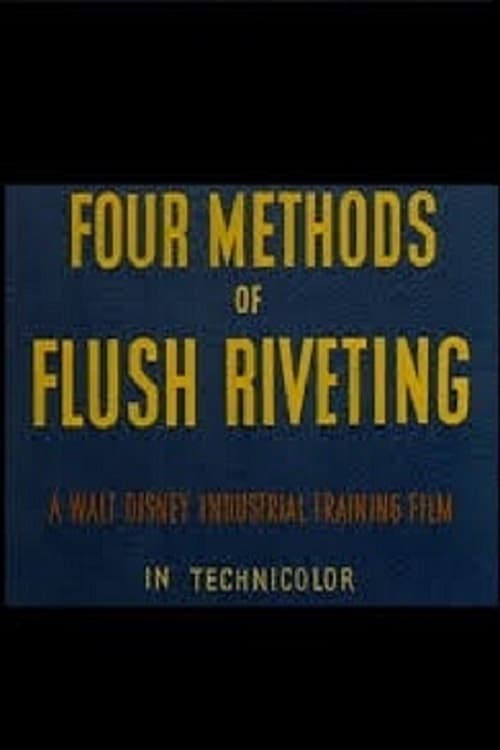
Four Methods of Flush Riveting
Seen it?1942 | 10 min | Documentary, Animation, War
 Monday Morning Maybeearly rating
Why it’s a Monday Morning Maybe
With a box office flop and almost no lasting buzz, this one could be a tough watch. Keep your phone handy.
Based on critics, audiences, awards, box office and buzz. Details below.Is it for you?
- Who'll love it
- A natural pick for anyone who knows cartoons aren't just for kids and people who love a true story told well. You'll come away knowing something you didn't. Shelve it next to For Sama or They Shall Not Grow Old.
- The mood
- Intense, feel-good.
- The pace
- Well paced for a documentary, at 10 min. An easy one to fit in on a school night.
- What might put you off
- No age rating on record, so check it first for young kids.
- Made in 1942: an older pace and style.
- Skip it if you want made-up drama tonight.
Flush riveting is a way of connecting two pieces of sheet metal together, using rivets whose heads do not protrude above the surface of the metal. In aircraft construction, a flush rivet reduces drag, thus increasing aircraft performance. This World War II-era Walt Disney industrial-training film teaches four methods of flush-riveting aircraft aluminum sheet metal: the Countersink method, the Double Dimple method, the Pre-Dimple method, and the Combination Pre-Dimple and Countersink method. The choice of method to use is based upon the thicknesses of the top and bottom metal sheets.
How it earned its rating
- CriticsNot counted
Not enough reviews on record yet
- AudiencesNot counted
Not measured yet: not enough ratings
- AwardsNot counted
No major awards or nominations
- Reach & staying powerWeak
Streaming release that reached a small audience so far
- Buzz & cultural impactWeak
Not enough engagement data yet
More like this
 For Sama
 Friday Night FlickAnother critically acclaimed documentary that fewer people know today.
 Tower
 Sunday Safe BetAnother animated story, and a safe bet for a quiet night.
 They Shall Not Grow Old Friday Night FlickAnother critically acclaimed documentary that fewer people know today.
 Virunga Friday Night FlickAnother critically acclaimed documentary that fewer people know today.
 20 Days in Mariupol Friday Night FlickAnother critically acclaimed documentary that fewer people know today.
Want more like this, picked just for you? Get my picks
Cast & crew
Directed by James Algar